

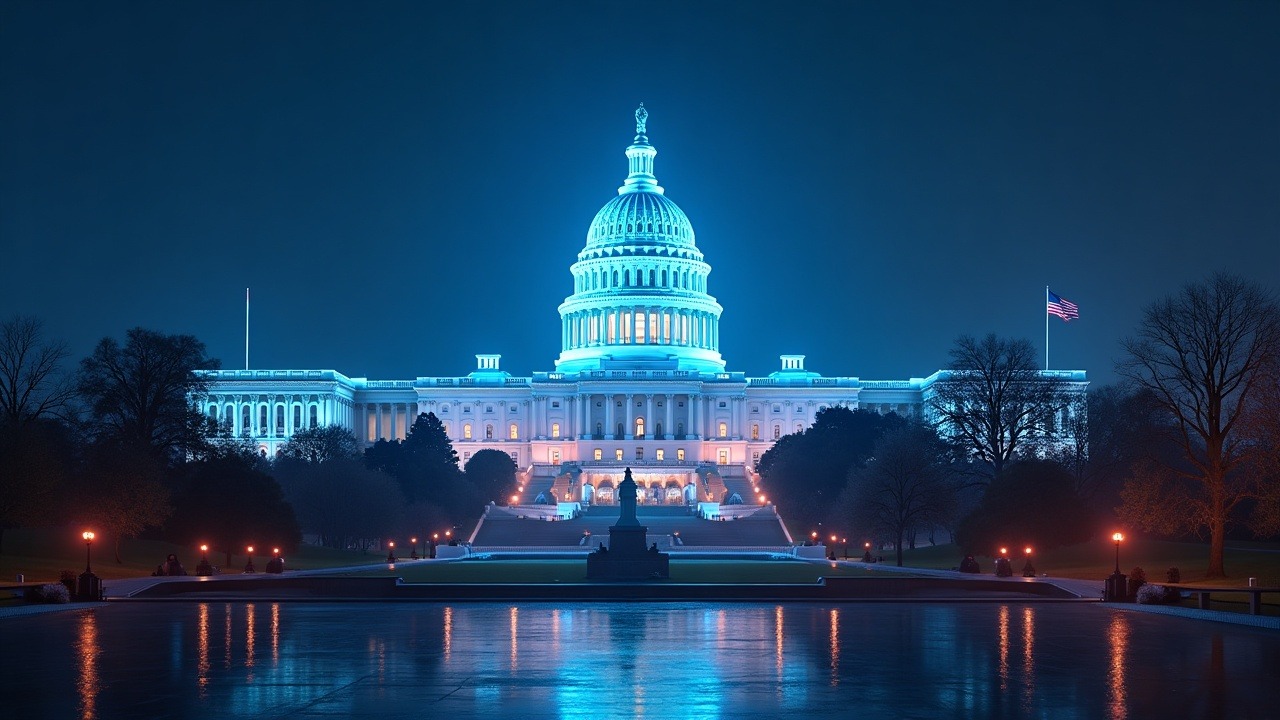
Senate Republicans released a consolidated version of the Digital Asset Market Clarity Act on July 22, combining work from the Senate Banking and Agriculture committees into a single market-structure proposal. Led publicly by Senator Cynthia Lummis, the draft attempts to replace fragmented crypto oversight with one federal framework, while preserving separate roles for the Securities and Exchange Commission and Commodity Futures Trading Commission.
The text builds on H.R. 3633, which the Senate Banking Committee advanced by a 15-9 vote in May. Its July revision incorporates the Agriculture Committee’s Digital Commodity Intermediaries Act as a separate division, creating registration pathways for exchanges, brokers, dealers and custodians under the CFTC. The merger is a legislative consolidation rather than final law, and the Senate must still resolve political disputes before any floor passage.
Draft Adds Asset Rules, AML Duties and Innovation Programs
Under the proposal, the SEC would retain authority over securities and primary transactions involving “ancillary assets,” while qualifying tokens could be treated as commodities for secondary-market purposes. The legislation would also require coordination between the SEC and CFTC for overlapping registrants. The classification language is central to the bill’s institutional impact, because it determines which regulator, disclosure regime and registration obligations apply to different products.
The updated draft expands beyond jurisdictional boundaries. It places covered digital-asset intermediaries under Bank Secrecy Act requirements, establishes federal standards for crypto kiosks and adds tools for suspicious-transaction holds, cybersecurity studies and law-enforcement training. It also creates AI innovation labs for regulated entities. These operational provisions could matter as much as the headline SEC-CFTC split, particularly for firms assessing compliance costs and product feasibility.
Republican authors also added an ethics title, but Democratic objections intensified after the release. Senator Elizabeth Warren and other critics argued that the enforcement structure relies too heavily on the Justice Department, restricts alternative enforcement routes and contains a sunset mechanism. The dispute leaves the bill without the bipartisan coalition normally needed to clear the Senate, where most major legislation faces a 60-vote threshold.
Recess Pressure Turns the Draft Into a Timing Test
Senate Majority Leader John Thune said in late July that he hoped to begin the floor process but questioned whether the measure could be completed before the August recess. Competing priorities, including nominations, government funding and sanctions legislation, compressed the available calendar. Missing the pre-recess window would not kill the bill, but it would push negotiations closer to the November midterm elections and reduce the time available for House-Senate reconciliation.
The delay contrasts with jurisdictions that have already fixed implementation schedules. The UK Financial Conduct Authority says its new cryptoasset regime is expected to begin on October 25, 2027, with final rules and preparatory guidance being issued ahead of commencement. That certainty gives firms a clearer operational timetable, even though the UK framework is also being introduced in stages.
The CLARITY Act had not completed Senate floor action. Its July draft remains significant because it shows how lawmakers intend to combine securities, commodities, banking, anti-money-laundering and technology policy in one structure. The decisive issue is now political execution, not the absence of legislative language: supporters have a detailed framework, but still need floor time and a workable bipartisan agreement.